
Vooks: Read-Aloud Kids' Books
Vooks IncEducation
4.3352.00 Reviews
- Version
- 19.7.0
- Installs
- 500.00K
- Age Rating
- Everyone
Screenshots
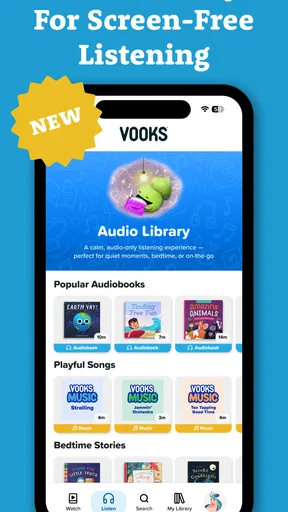
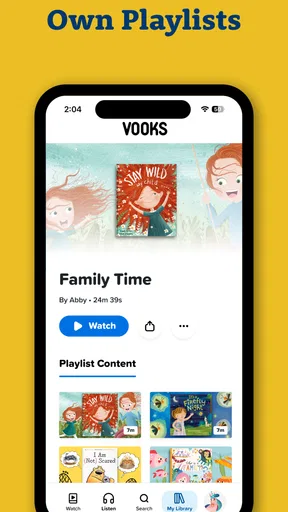
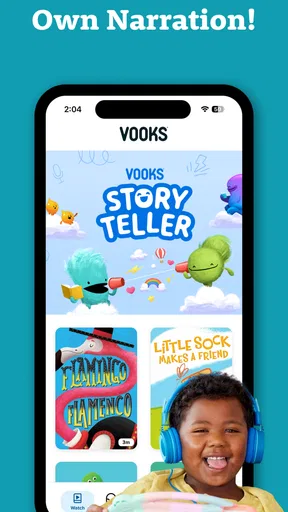
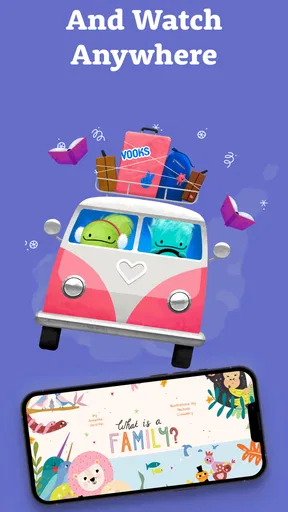
Our Review of Vooks: Read-Aloud Kids' Books
 Analysis by Appyee
Some children’s reading apps are exciting for a few evenings and then quietly disappear from the home screen. My experience with Vooks: Read-Aloud Kids' Books is more balanced: its first impression is strong because it makes story time feel active without turning it into a game, but its lasting value depends on whether a family uses it as part of a routine rather than as an occasional distraction. The idea is simple—animated books with narration—but the way those pieces work together can make a real difference when a child is tired, a parent is busy, or reading aloud is difficult to fit into the day.
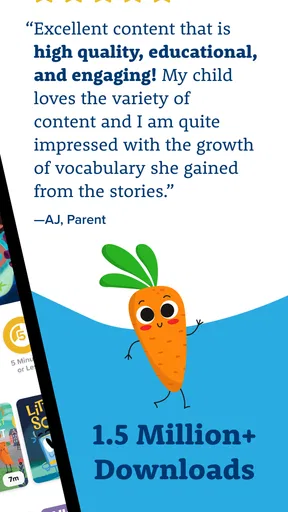
Vooks is a free education app from Vooks Inc, aimed at everyone and especially useful for families looking for a gentler kind of screen time. It has reached over 500 thousand installs and holds a 4.3 average from around 4 thousand ratings, which gives it a solid presence without making it feel like an all-purpose children’s platform. I would recommend trying it with a clear purpose: use it to support story habits, not to replace every physical book, conversation, or shared reading session.
Why the first week feels so easy
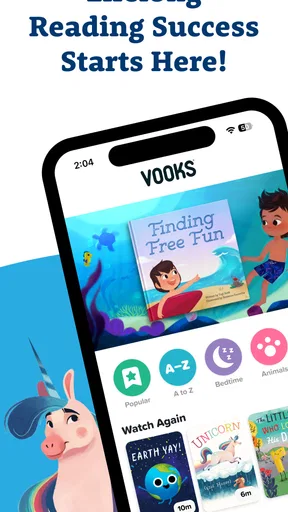
The first few sessions are appealing because the app removes much of the friction around choosing and starting a story. A child does not need to understand a complicated interface before getting to the main experience. The books combine moving illustrations with read-aloud narration, so the screen has something to hold attention while the words remain central. That balance is important. It feels more like a story being performed than a conventional video made only to keep a child watching.
In my first-week view, the strongest benefit is accessibility. A parent can introduce a story even when they are cooking, dealing with another child, or simply out of energy at the end of the day. A child who is not yet reading independently can still follow the rhythm of a book, notice repeated language, and connect the spoken words with the illustrations. Older children may also enjoy listening while looking at the page-like scenes, although the appeal will naturally depend on their reading level and patience with narration.
A realistic use case is the transition between dinner and bedtime. Instead of handing over a random entertainment app while everyone gets ready, a parent can choose a Vooks story and sit nearby for part of it. The app handles the read-aloud portion, while the adult can pause the routine to ask what a character is doing or predict what might happen next. That small amount of interaction changes the experience from passive viewing into a shared reading moment.
The most useful first-week habit is to treat each story as a starting point for conversation, not as a babysitting substitute. Even a short question after the book—“Which part was surprising?” or “What would you have done?”—helps preserve the social side of reading. Vooks makes this easier than a standard cartoon because the material is structured around books, but the parent still has to create the connection.
Animated books are helpful, but they change the reading pace
The animation gives Vooks an advantage over a plain digital bookshelf. Movement can draw a reluctant child into a story that might otherwise seem too quiet. It can also help younger children understand mood and action before they can decode every word. For families trying to introduce books to a child who prefers video, this bridge is practical rather than theoretical.
There is a trade-off, though. Traditional picture books leave room for a child to study an illustration for as long as they want, ask to go back, or invent details before the adult turns the page. A narrated animated presentation encourages a more guided pace. That is not automatically bad, but it means I would not use Vooks as the only reading environment. I would alternate it with printed books or a less animated digital library when the goal is independent exploration.
The first week can also create a misleading sense of success. Children often respond enthusiastically to anything new, especially when it moves and speaks. The more meaningful test is whether they return to it after the novelty fades. That is where the app’s design has to do more than make a good opening impression: it needs to fit naturally into a family’s schedule and offer enough variety for repeated story time.
What keeps it useful after the novelty wears off
Vooks earns recurring value when it solves a repeat problem. For me, that problem is not “my child has nothing to watch.” It is “I want the available screen time to have a clear literary purpose.” The app gives that time a boundary and a theme. A story before bed, a quiet listening period during travel, or a short reading break after school can become predictable moments instead of improvised scrolling.
That distinction matters month to month. A child may not remember every title, but a regular pattern of listening can make books feel familiar and approachable. The narration models expression and pacing, while the animated scenes offer visual context. Parents who find read-aloud books tiring every night may appreciate having a dependable backup that still points toward stories rather than unrelated clips.
I also see value for children with different levels of confidence. A beginning reader can listen without the pressure of performing. A child who is learning English can benefit from hearing sentences spoken naturally while watching the action. A more independent reader might use the app as a listening alternative, though that child may eventually prefer books with more control over speed and less visual movement. The same feature can therefore be supportive at one age and limiting at another.
Another useful workflow is to use Vooks as a preview tool for offline reading. If a child enjoys a story’s characters or theme in the app, a parent can follow up with a related paper book from the home shelf or library. This prevents the digital version from becoming the endpoint. The animated story creates interest; the physical book extends it into a slower activity with more room for questions and rereading.
Families should also be realistic about the subscription-style economics suggested by the in-app purchase range. The app itself is free to install, while individual in-app purchases run from about ten dollars to nearly seventy dollars per item. That makes the initial trial less intimidating, but it also means I would inspect the available access carefully before building Vooks into a long-term routine. A free download is not the same as unlimited use without payment, and parents should make that distinction clear before handing the device to a child.
Who benefits most from continued use
Vooks is at its best for households that want a managed source of read-aloud children’s books and need flexibility. It suits a preschool or early elementary routine, a child who enjoys visual storytelling, and parents who want an easier way to preserve story time on busy days. It can also be useful when two children need different activities and one of them can listen independently for a while.
I would be more cautious for families whose main goal is teaching a child to read alone. Listening and watching are valuable, but they do not automatically provide the same practice as sounding out words, tracking text, or choosing a book without assistance. In that situation, a phonics-focused tool, a straightforward digital library, or daily paper-book practice may be a better primary choice, with Vooks used as reinforcement.
It is also not the right fit for a family that wants complete control over reading speed and presentation. A conventional e-book can be better when a parent wants to skip ahead, linger on one illustration, or let a child navigate every page. Vooks is designed around a more prepared performance, and that convenience comes with less freedom than a blank book page offers.
The maintenance burden behind a simple experience
The app is easy to introduce, but maintaining its value requires more parental attention than the animated format first suggests. Someone still needs to decide when it is used, choose an appropriate story, and prevent it from becoming an automatic answer whenever a child is bored. If the device is always available, the reading purpose can blur into ordinary screen consumption.
I recommend setting a small ritual around it rather than leaving the app open-ended. For example, choose one story after dinner, keep the sound at a comfortable level, and follow it with a short offline activity. That might be drawing a favorite scene, retelling the plot, or finding an object in the room that matches the story’s theme. The extra step takes little time, but it makes the app feel connected to learning instead of isolated from the rest of the day.
Parents should also check the experience themselves before allowing unsupervised use. The Everyone age rating makes the app broadly suitable, but age suitability is not the same as personal suitability. A younger child may need help navigating, while an older child may find some presentations too simple. Reviewing a few stories together helps families decide whether the tone, pacing, and subject matter fit their child.
Device management is another practical consideration. Since Vooks is a screen-based experience, it belongs in the same conversation as other digital routines: when it is allowed, where it is used, and what happens when the story ends. I would avoid using it as the final bright activity immediately before sleep if the child becomes stimulated by animation. For another child, the calm narration may work well at bedtime. The right choice depends on the child’s reaction, not just the app’s educational label.
The current version is 19.7.0 and the app requires Android 7.0 or later. That makes compatibility worth checking on older devices before planning around it. A family using an older phone or tablet may have a different experience from someone with a newer device, particularly when animation and audio are involved. I would test the app on the actual device intended for the child rather than assuming that an installation alone guarantees comfortable daily use.
Where fatigue can appear over time
The first source of fatigue is repetition. Even a good collection can feel narrow when one child wants the same favorite repeatedly while the adult wants something new. Repetition is valuable for language learning and confidence, but it can also make parents feel that they are paying for a library they are not actively exploring. A simple rotation—favorite, unfamiliar story, then an offline book—helps prevent that feeling.
The second is the guided pace. Animation and narration make starting easy, but they may become tiring for children who want to control the experience. Some will ask to pause, replay, or move quickly through familiar sections. If the app does not match that child’s preferred rhythm, a paper book may be more satisfying even when it looks less impressive.
The third is the risk of confusing educational presentation with deep engagement. A book can be animated and narrated without automatically producing discussion, comprehension, or independent reading. I found the strongest results came when an adult occasionally joined in, even for a minute. Without that connection, the child may remember the movement more than the story’s language or idea.
There is also a financial fatigue point. Because the free installation can lead toward in-app purchases ranging from about ten dollars to nearly seventy dollars per item, families should decide in advance what level of spending feels reasonable. I would not make a purchase simply because a child asks for access in the moment. First observe whether the free experience becomes part of the routine, then judge whether expanded access would genuinely replace another cost or solve a recurring problem.
Finally, Vooks may lose relevance as a child’s needs change. A young listener who once needed animation may later want chapter books, independent reading, or more challenging vocabulary. That does not mean the app failed; it means its role should shrink or change. Keeping it as an occasional read-aloud option can make sense, but expecting one children’s app to cover every stage of literacy usually leads to disappointment.
My long-term verdict on keeping Vooks installed
After the novelty fades, I think Vooks can earn lasting space on a family device, but only when it is used deliberately. Its recurring strength is convenience with a literary direction: it gives parents a ready-made story experience when a physical read-aloud is not practical, while giving children more structure than random entertainment. The animated format is especially effective as a bridge for children who resist quiet books but respond to visual storytelling.
I would keep it installed for a family that values short, repeatable story sessions and is willing to participate occasionally. I would not make it the only reading tool, and I would not leave it available as an unlimited boredom solution. The best long-term setup is a mixed one: Vooks for narrated discovery and busy-day support, paper books for shared reading and imagination, and a more focused literacy resource when the child needs direct reading practice.
Vooks Inc has built an app that is easy to recommend with those boundaries in mind. It is free to start, carries an Everyone rating, and has been available since October 16, 2018, so it is not merely a brand-new novelty. Its 4.3 average and broad install base reflect a product that many families find useful, but those figures should not replace observing how your own child responds to the pacing and format.
My final advice is to test it as a habit rather than as a one-night treat. Use it at the same general time for a week, ask one question after each story, and notice whether your child returns willingly once the excitement of a new app has passed. If the routine creates more conversation about books and makes busy evenings easier, it has earned its place. If it only fills silence and your child never connects with the stories, a physical library visit or a simpler reading app may serve you better.
For me, the lasting appeal is not the animation by itself. It is the possibility of turning a difficult gap in the day into a small, repeatable reading moment. That is a modest promise, but a useful one—and it is enough to make this free educational app worth trying for the right family.
Verdict
Strengths of Vooks: Read-Aloud Kids' Books
- Engaging read-aloud narration helps keep young children focused.
- Includes animated illustrations that support visual learning.
- Offers a curated library designed specifically for early readers.
- Useful for quiet time, bedtime, or independent screen activities.
- Reading levels make it easier to find age-appropriate stories.
Limitations of Vooks: Read-Aloud Kids' Books
- Most of the library requires a paid subscription.
- Limited offline access may depend on the selected subscription plan.
- Some children may outgrow the content as their reading skills advance.
- The app can encourage passive viewing if adults do not read along.
- Library availability and features may vary by region or device.
Similar Picks in This Category
View All
Duolingo: Language Lessons
Duolingo4.7

Google Classroom
Google LLC2.8

Unacademy: Learn & Crack Exams
Unacademy3.2

Bible App for Kids
Life.Church4.4

Cake - Learn English & Korean
Cake Corp.4.7

Brainly: AI Homework Helper
Brainly4.5
Frequently Asked Questions
What is Vooks: Read-Aloud Kids' Books?
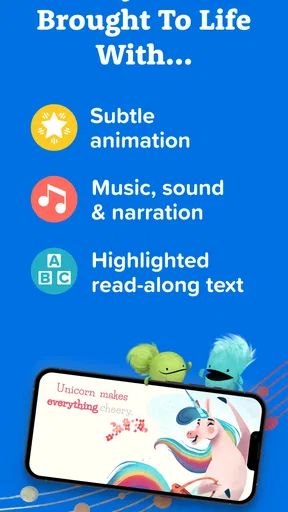
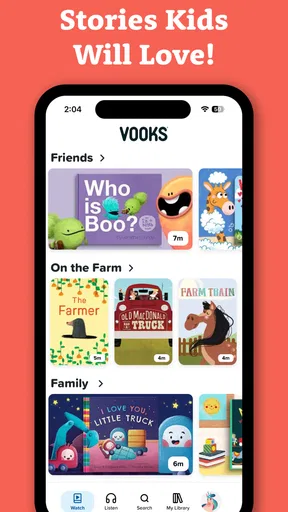
Vooks is a children’s digital reading platform that combines animated storybooks with professional narration, music, sound effects, and highlighted text. It is designed to make story time more engaging for young children while supporting early literacy skills. The library includes picture books and educational stories that families can stream through the app on compatible mobile devices.
Is Vooks suitable for my child’s age and reading level?
Vooks is primarily aimed at preschool and early elementary-age children, although the best experience depends on each child’s interests, attention span, and reading ability. Younger children can listen and watch independently or with an adult, while emerging readers may benefit from following the narrated text. Parents should review individual titles because themes, vocabulary, and pacing can vary.
Does Vooks require a subscription, and is there a free trial?
Vooks generally operates through a paid subscription model, although availability of trial periods, pricing, and promotional offers may differ by country, platform, or billing method. Before downloading, check the current details shown in the Google Play Store, Apple App Store, or Vooks’ official website. Remember to review renewal terms and cancel before the trial ends if you do not want to continue.
Can children use Vooks without an internet connection?
Offline access may depend on the subscription plan, app version, and the specific device being used. If downloadable content is available, an adult should save selected books while connected to Wi-Fi before traveling or using the app away from home. It is also wise to test downloaded titles in advance, since offline availability, storage requirements, and download limits can change after updates.
Is Vooks safe for children and free from advertisements?
Vooks is designed as a child-focused reading environment and is generally intended to provide stories without the distracting advertising commonly found in free children’s video apps. However, parents should still create or manage the account, check privacy and subscription settings, and supervise younger children when appropriate. Reviewing the app’s current privacy policy and parental controls is recommended before regular use.
